Method Study 
A systematic and critical approach to scrutinising work activities (the method carried out) to improve productivity.
The origins of method study arose with the concept of motion study which was promoted in the early 1900s by the husband-and-wife team of Frank and Lillian Gilbreth. Their focus was on analysing the movements (i.e. motion) carried out by the body in physical work in achieving a task. They argued that identifying the most appropriate and productive way in carrying out a task could be achieved by eliminating unnecessary actions, thereby removing wasteful motions. This was considered as an essential precursor to work measurement, all being within the practice of work study. They created a new term for the basic elements of human motion: therbligs, which is an anagram of their surname.
The process has six main stages:
1. Select the activity to be scrutinised, making sure it is well defined.
2. Record all relevant information about the activity.
3. Examine the information that has been recorded.
4. Develop an improved method of carrying out the activity.
5. Install the new improved method as the standard work practice.
6. Maintain the improved method through monitoring and feedback on its application.
Besides aiming to improve the efficiency and effectiveness of resource use, method study also contributes to improving the health and welfare of workers because reducing wasteful movements helps to reduce fatigue and the risk of injury.
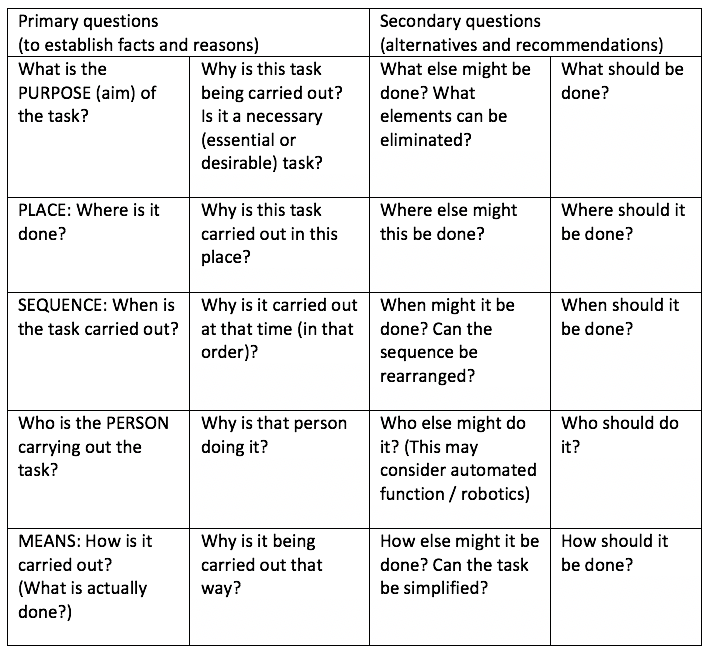
A grounds manager will want to be looking to continually improve on working practices carried out by the grounds team. A detailed analysis of a task is usually the major focus of activity in method study and this will take place after it has been selected for review, typically prioritising those more time-consuming tasks or those which are problematic in some way, and with as much information recorded about it as practicable. A critical examination of each stage of the activity will occur aiming to provide insight into the task and better judge the appropriateness of the different tasks. This will lead to highlighting areas for improvement.
Recording all the relevant information will involve careful observation of work activities. An outline process chart can be completed, which might be more suitable for grounds maintenance work than a detailed process chart, which might be more appropriate for use within a factory or indoor work situation. The different elements / instances of movement of activities can be recorded using the symbols in method study:
• Operation = O: The main work action, for example, selecting height of cut bar; operating a scarifier; using a fertiliser distributor; etc.
• Transport = ⇨: Moving something from one location to another, although not part of the work operation.
• Inspection = ☐: Checking height of cut, quality of finish, cables secured, etc.
• Delay = D: for example, having to wait for something before being able to proceed, awaiting instructions, etc.
• Storage ∇: for example, putting something away in a cabinet, shelf, allocated floor space, collecting an item from store, holding an item, etc.
Example of a basic outline process flow chart
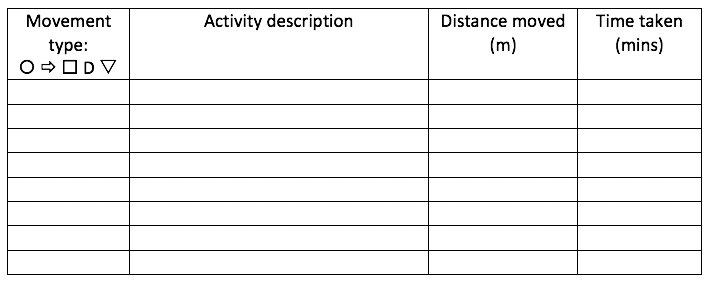
The procedure can be presented in a matrix as follows:
With recruitment and staff retention becoming increasing challenging following the Covid pandemic and the political mismanagement of the withdrawal from the European Union, the need to remove wasteful actions and fine tune practices has rarely been greater.