2.3 Assessing Pitch Quality
2.3.11 Using a weighted system
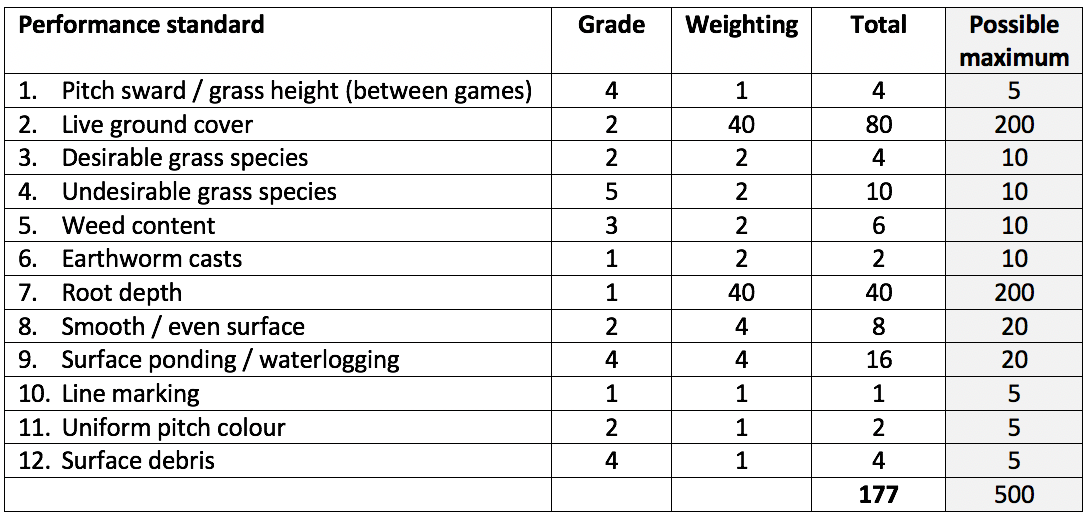
1 Using a weighted system to help determine overall pitch grade can help to differentiate between performance standards that have a more significant impact on pitch quality, as well as the difficulty involved in correcting a performance standard.
It is much harder to encourage and maintain good root growth than to mow a pitch to any particular height of cut. Is it reasonable to have a different in weighting for these two performance standards?
The majority of groundskeepers would agree that it is reasonable to do so. What the actual weighting might be is subjective and can involve much discussion and disagreement before, hopefully, an agreed value is arrived at for a particular situation. Involving stakeholders to arrive at a suitable weighting value can help towards a better take-up and buy-in for maintaining and managing pitches to performance standards.