2.2 Examples of Performance Standards
2.2.8 Surface ponding
This is related to infiltration rate and is especially important as a pre-match assessment for safety.
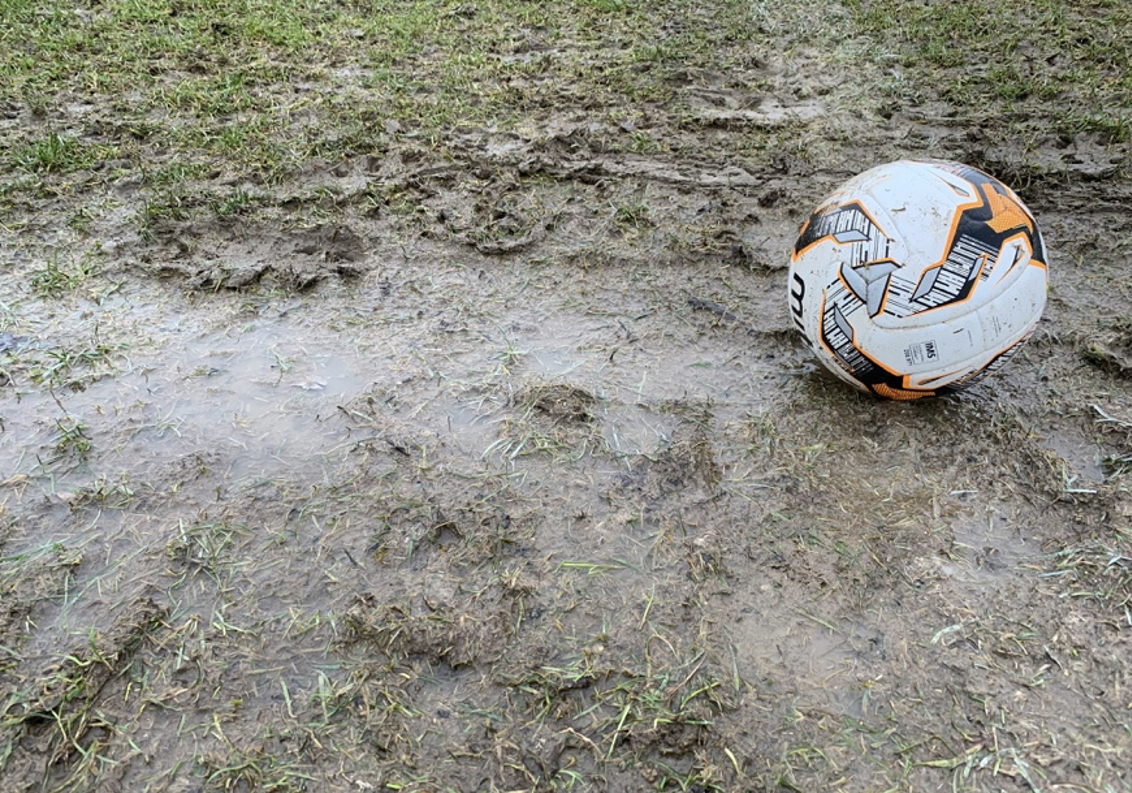
We don’t want to play on a pitch that has puddles of water on as these can be a hazard which can result in player injuries. In addition, the playing experience can be seriously compromised with standing water.
A very small amount of surface water, in limited areas only, might be acceptable in certain situations, so this would need to be determined by the pitch providers as part of conditions of use.
Checking pitch condition mid-week before weekend games can help provide an indication of likely ponding issues nearer a weekend match day. Action can be taken to help alleviate ponding issues in time for a weekend game. Localised forking, aeration and sanding might be considered as possible short-term solutions, if appropriate.