Module 2:

Pitch quality

2.3 Assessing Pitch Quality

2.3.3 Selection of pitch test locations

1   Be careful not to ‘randomly’ select locations for checks in just low wear areas as this will produce a result that would indicate the pitch is to a higher standard than it really is.

One of the main purposes of assessing a pitch is to aim to produce an outcome that is representative of the pitch so that an informed decision can be made for how well the pitch is being managed. It is quite easy to focus on the wing areas, which will typically retain a lot more coverage than the central portion of the pitch, but most play doesn’t take place in the wing areas and so this will not be representative of the experience players have of the pitch.

Caution does need to be taken when interpreting results and overall grades because significant variation in outcome can arise depending on the number of test locations used, the siting of the test locations, the accuracy of recording findings as well as how the overall grade is arrived at.
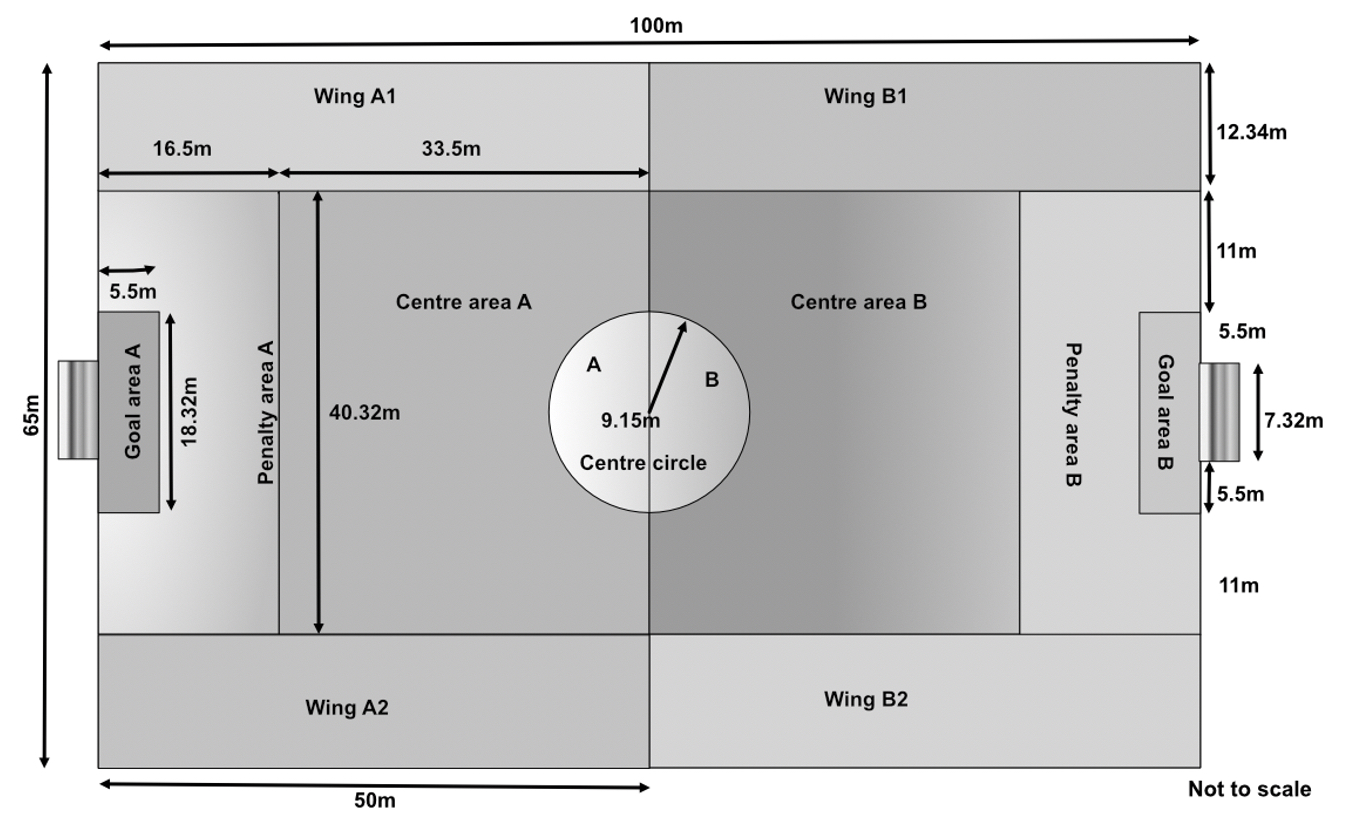
2   For the purposes of this module and course we will use just three test locations on a pitch to help build-up a general picture of overall pitch quality. The aim of this basic approach is for you to practice the principles of checking the condition of a pitch.

The three pitch locations we will use are identified on the pitch plan as follows:

  1. Goal area / penalty area A (suggested location being midway between the right-hand edge of the goal area and the front edge of the penalty area).
  2. Centre circle: A.
  3. Wing B1.
Pitch assessment locations

3   Within each location area the place where the measurement takes place should be randomly selected, so don’t just place a quadrat down on a place that is clearly much better than a close by area.

Stand slightly away from the desired test area, close your eyes and gently throw the quadrat into the location area. That is where the measurement should take place.

Do this for each recording needed in each location.

There are more scientific ways of randomly selecting the actual location, and the positions within a location, but for our purposes the way we have just described is quite suitable.

4   The total number of readings, using the minimum number of test readings per test, will be 70.

For the 12 performance standards we previously identified, 7 standards will have with 3 readings each; and each set of these standards will be tested at the 3 different locations: 7 x 3 x 3 = 63).

Added to this will be the remaining 4 standards, each of which will have one overall reading (so 4 x 1), and root depth which will be 1 reading per location as a minimum (so 3 x 1).

5   A pitch could be divided into more than the twelve areas shown in the diagram and this will help to even better focus work activities on areas that require more attention than others.

This type of assessment provides an objective baseline for informing on how successful the current pitch maintenance and management is.

Performance standards, where used proactively to manage a pitch, provide a significant contribution to the sustainable use of a pitch. Proactive use means regular testing to identify trends in the condition of the pitch, allowing a grounds manager to adjust management practices before unacceptable pitch deterioration arises.

6   Carrying out just several tests in a few locations might be useful to attract new or continued funding, but the value of limited testing is arguable and is probably more aligned towards getting a tick in the box for some administrative or funding requirement.

It offers limited insight for a groundskeeper on how to best maintain their surface in a cost-effective way. This limited approach may, arguably, be contributing to a decline in the professional status of groundskeeping.

Module progress: 51%