Module 2:

Pitch quality

2.3 Assessing Pitch Quality

2.3.4 Assessing your own pitch

1   Let’s have a go at assessing your own pitch.

In the first instance decide on the test locations (well, we have already decided on these for you for this example) and make sure you have your equipment and recording implement ready.

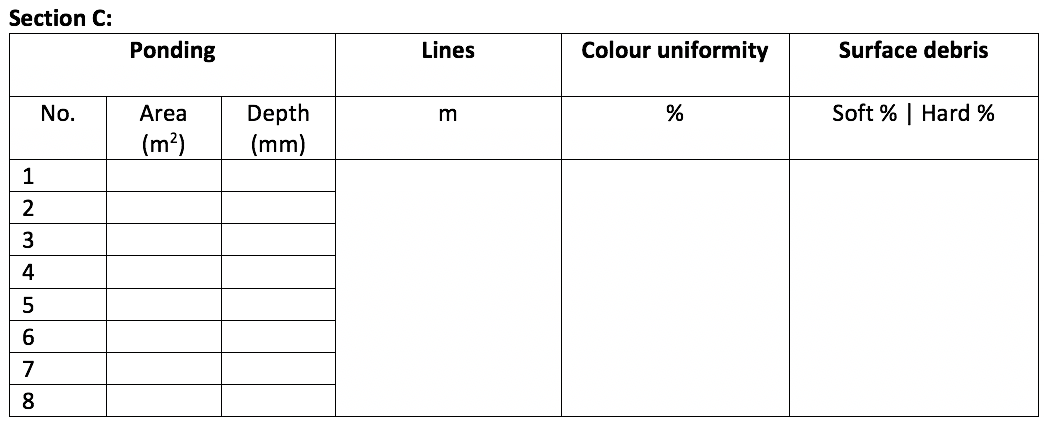
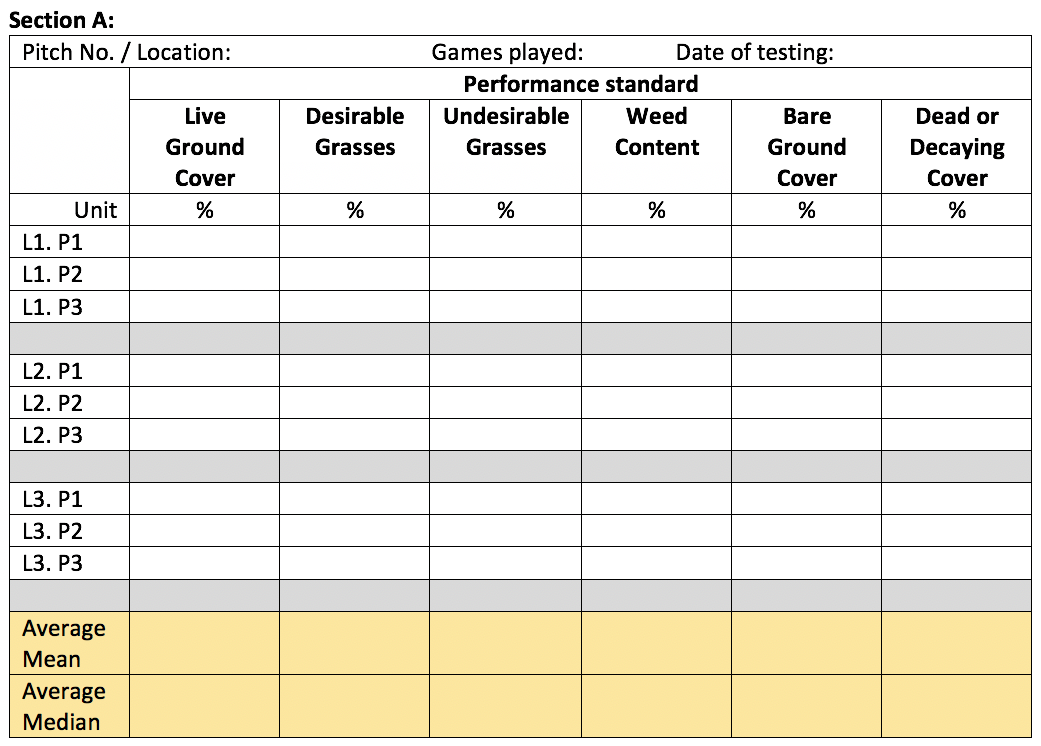
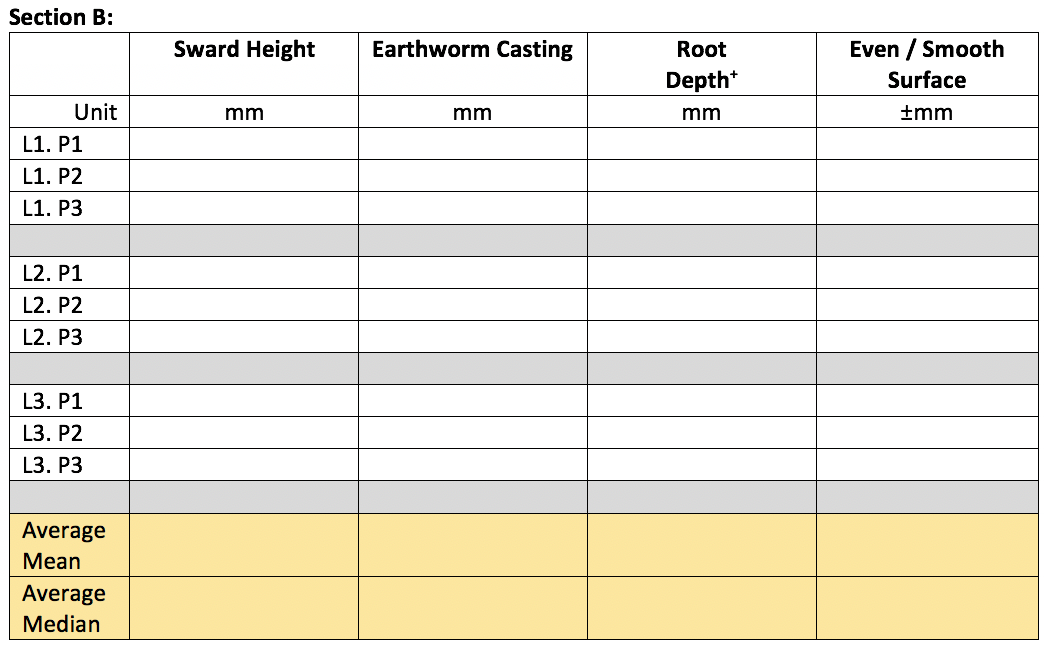
Use the following worksheet to record your findings. We have also included a completed example of the worksheet. The purpose of this activity is for you to take some measurements and observe some of the different performance standard that make up a football pitch.

Don’t worry too much about being precise, especially on estimating values for visual observations because this will improve with more practice. For now, just have a go and make some notes.
2   We would anticipate that it will take about 2 hours to complete.

If you are unable to walk over a football pitch for this activity then do a simulation, thinking back to when you last walked a pitch and try and put some estimated values into the chosen table.

The key used in the worksheet is as follows:

  • Location area number (L): Name of location area
  • L1: Goal area / penalty area A.
  • L2: Centre circle: A.
  • L3: Wing B1.
  • P = Position 1, 2 or 3.

Blank worksheet using 3 pitch locations

Assessment worksheet Section A
Assessment worksheet Section B
Assessment worksheet Section C

(If there are more areas that are ponding then just add extra lines to the worksheet)

 Download this example as a pdf file

 Download this example as a MS Word file

3   For clarity, we haven’t provided average values for each location (we have left the grey row below each of the 3 readings blank), but this is something that would be useful to a groundskeeper to identify any particular locations that might be additional attention.

4   We have used lines for both the Mean and Median in the completed example worksheet to illustrate any differences in what might be termed a representative value. For this worked example the total averages are very similar.

5   A pitch could be divided into more than the twelve areas shown in the previous diagram and this will help to even better focus work activities on areas that require more attention than others.

This type of assessment provides an objective baseline for informing on how successful the current pitch maintenance and management is.

Performance standards, where used proactively to manage a pitch, provide a significant contribution to the sustainable use of a pitch. Proactive use means regular testing to identify trends in the condition of the pitch, allowing a grounds manager to adjust management practices before unacceptable pitch deterioration arises.

6   Carrying out just several tests in a few locations might be useful to attract new or continued funding, but the value of limited testing is arguable and is probably more aligned towards getting a tick in the box for some administrative or funding requirement.

It offers limited insight for a groundskeeper on how to best maintain their surface in a cost-effective way. This limited approach may, arguably, be contributing to a decline in the professional status of groundskeeping.

Module progress: 54%