2.2 Examples of Performance Standards
2.2.5 Undesirable grasses
These are not as hard wearing as the desirable grass/es, and some can be easily kicked out of a pitch, which can increase the need for additional divoting.
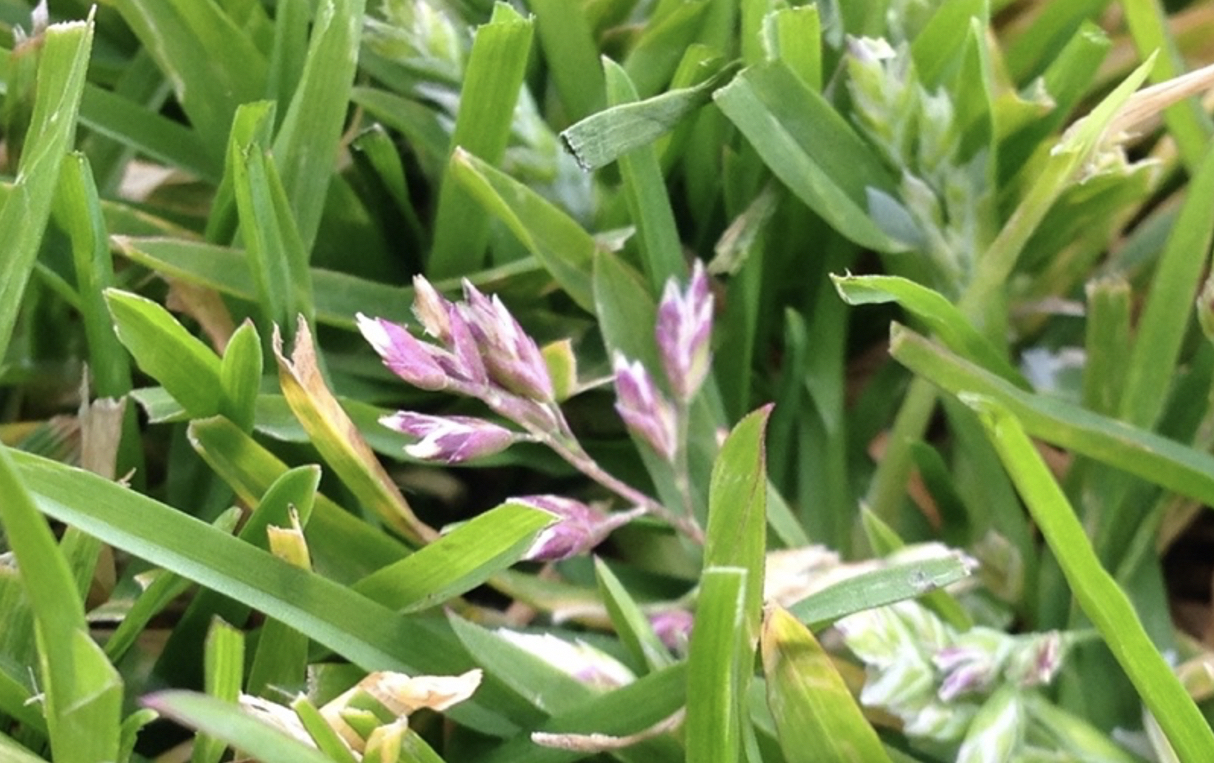
As the season progresses there is also an increased likelihood of the pitch becoming muddier, with a more uneven surface. The main undesirable grass is Annual Meadow Grass (Poa annua). Less experienced groundskeepers will often refer to this grass as just Poa, but there are several Poa species which may be present within a turf surface, so it is important to state what it is that is actually being described.
This grass is very susceptible to being attacked by numerous diseases, sets seed quite easily, which reduces presentation quality of the pitch, it turns a yellowish green quite quickly when water supply is limited, requires relatively high amounts of fertiliser to keep it growing well, as well as abundant supplies of water during dry weather, and produces a less dense sward than desirable grasses.