6.3 Soil science
6.3.4 What are the different soil types?
1
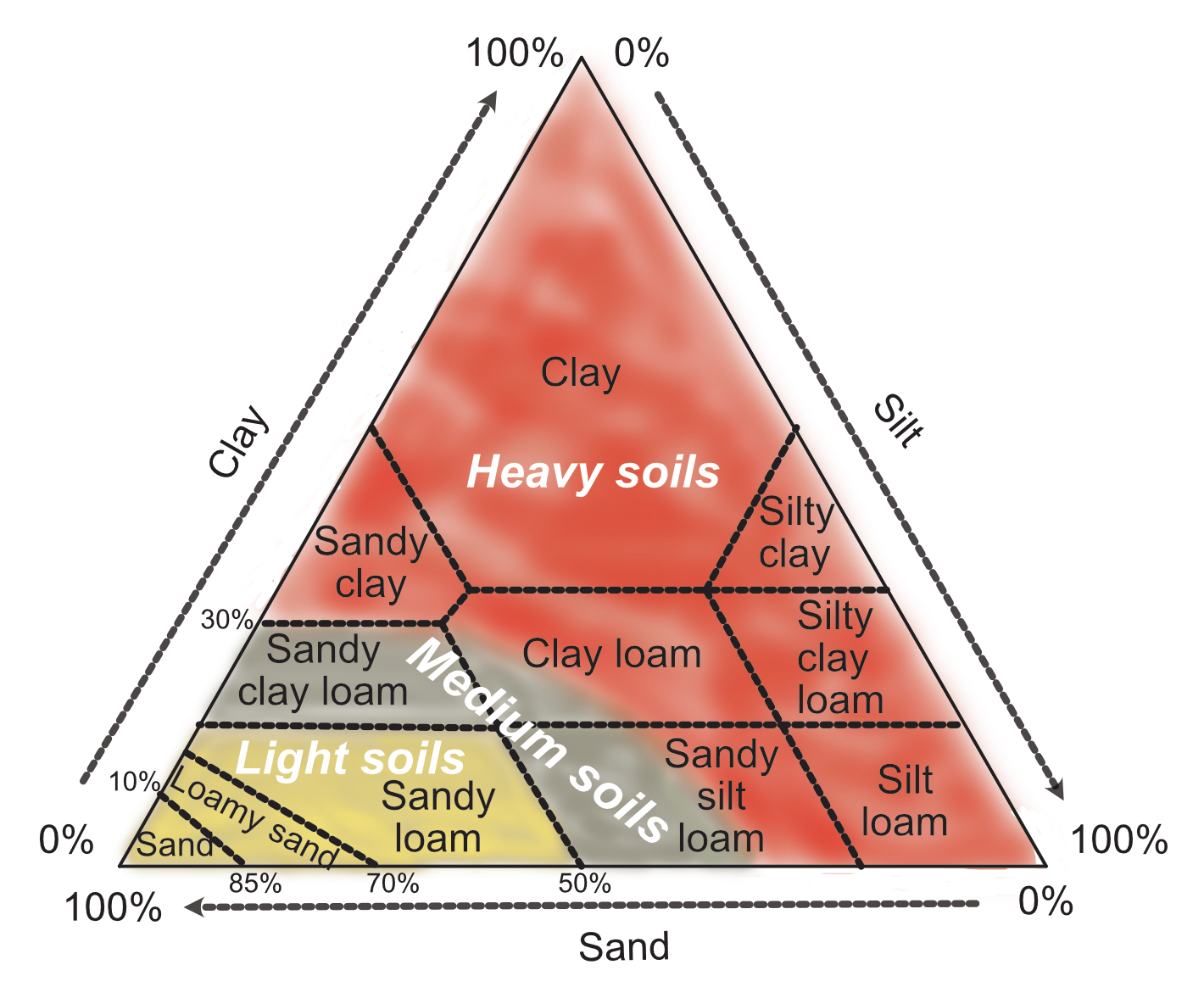
There are two main soil classifications used in the UK: the SSEW (Soil Survey of England and Wales) and the USDA (United States Department of Agriculture).
The SSEW has 11 soil textural classifications, whilst the USDA has 12.
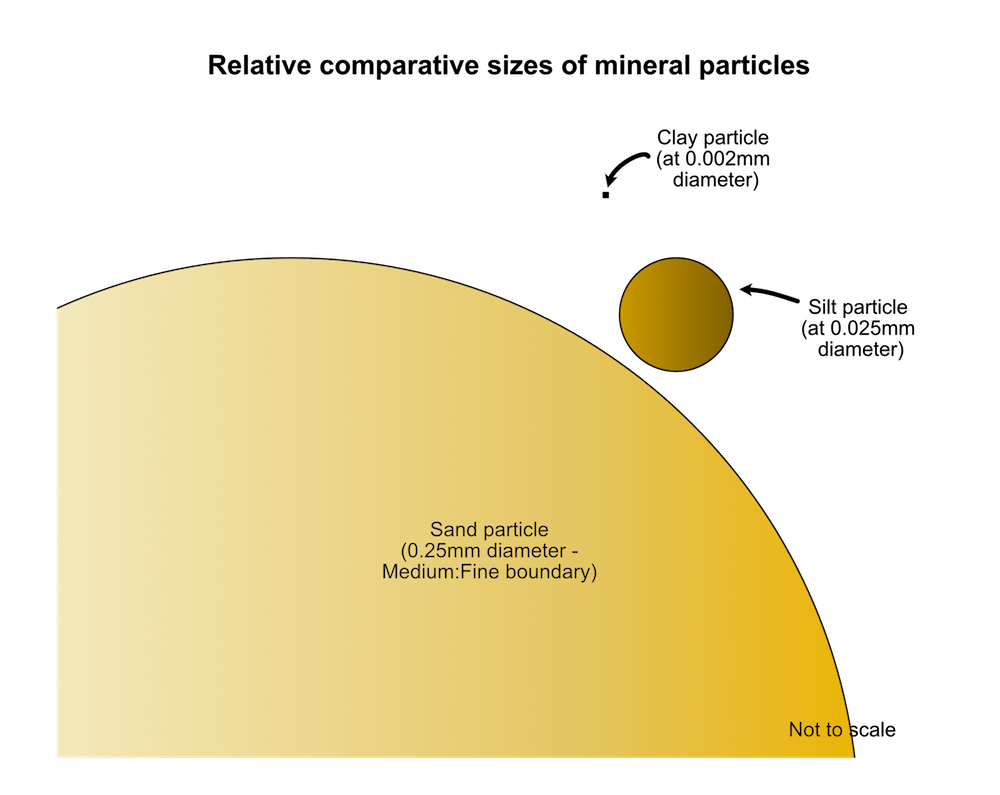
Each soil textural classification can have quite a variation in the proportions of the three soil particles of sand, silt and clay. For example, a sandy loam soil might contain from 50% to 85% sand, which is a significant difference.
The terms soil texture and soil structure can often be confused with each other, so we are just clarifying each meaning:
Soil texture: The proportion of sand, silt and clay in a soil. Soil texture is a stable feature of a soil and will only change when large quantities of additional mineral particles are mixed into the existing soil.
Soil structure: This is a description of how soil particles are arranged, or clumped together, into aggregates. The pore space within an aggregate and between aggregates is an important aspect of soil structure. A well-structured soil will generally provide good growing conditions, allow for good root growth, improved drainage and a drier surface. Poorly structured soils will provide the opposite of beneficial conditions, including poor drainage, waterlogged surface, poor root growth and increased match cancellations of games where sports are played on the area.