Module 6:

Turf science

6.3 Soil science

6.3.1 Plant nutrition

1 What does fertiliser origin mean?

This is the original source material for a fertiliser, being derived from either organic or inorganic origins.
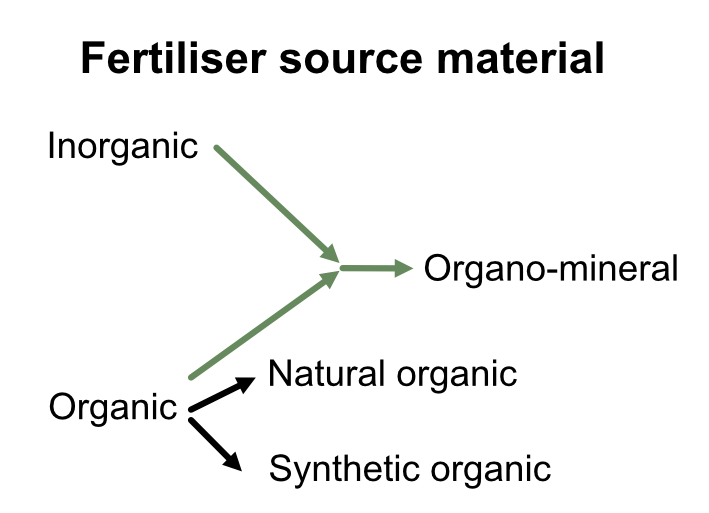
Fertiliser origins

The organic element may also be referred to as natural organic and synthetic organic, with the latter distinguishing artificially created carbon-based fertilisers - primarily urea based (e.g. IBDU, or Isobutylidene Diurea) with naturally occurring organic carbon fertilisers (e.g. bonemeal), and synthetic inorganic which would be a typical compound granular fertiliser.

Where a product is a blend or combination of both origins then this will be called an organo-mineral fertiliser. Sometimes the fertiliser origin is termed as fertiliser group, but often many fertiliser terms are used quite loosely or liberally.

2 What is the nutrient release rate for a fertiliser?

Nutrients, especially nitrogen, can be released by a fertiliser and made available to plants at different rates over a period of time, which might be from about a week to maybe 3 to 6-months.

These can generally be grouped as either:

  • Quick release - these are mostly inorganic fertilisers.
  • Slow release - these are mostly organic fertilisers and some synthetic fertilisers.
  • Controlled, or phased, release - these are synthetic fertilisers which have been coated with a material that artificially reduces the rate of release so that these types of fertiliser could be applied in the spring and they (in theory) last an entire growing season until the autumn period.
  • Fertiliser products for sale might be created that contain more than one type of the nutrient release fertilisers.
Module progress: 64%