Module 6:

Turf science

6.3 Soil science

6.3.2 Soil pH

1 What is soil pH?

This is a measure of how acid or alkaline a soil is.

The pH scale ranges from 0 to 14, with 7 being classed as neutral; less than 7 is acid, whilst greater than 7 is alkaline. Most soils in the UK range from pH 4 to 8, although many of the grassland soils on which many football pitches are located will typically have a pH range from 5.5 to 7.5, so basically, they are starting from either quite a reasonable pH base, or very close to one in most cases. In practice this means that no active adjustments will be needed for the majority of existing pitches.
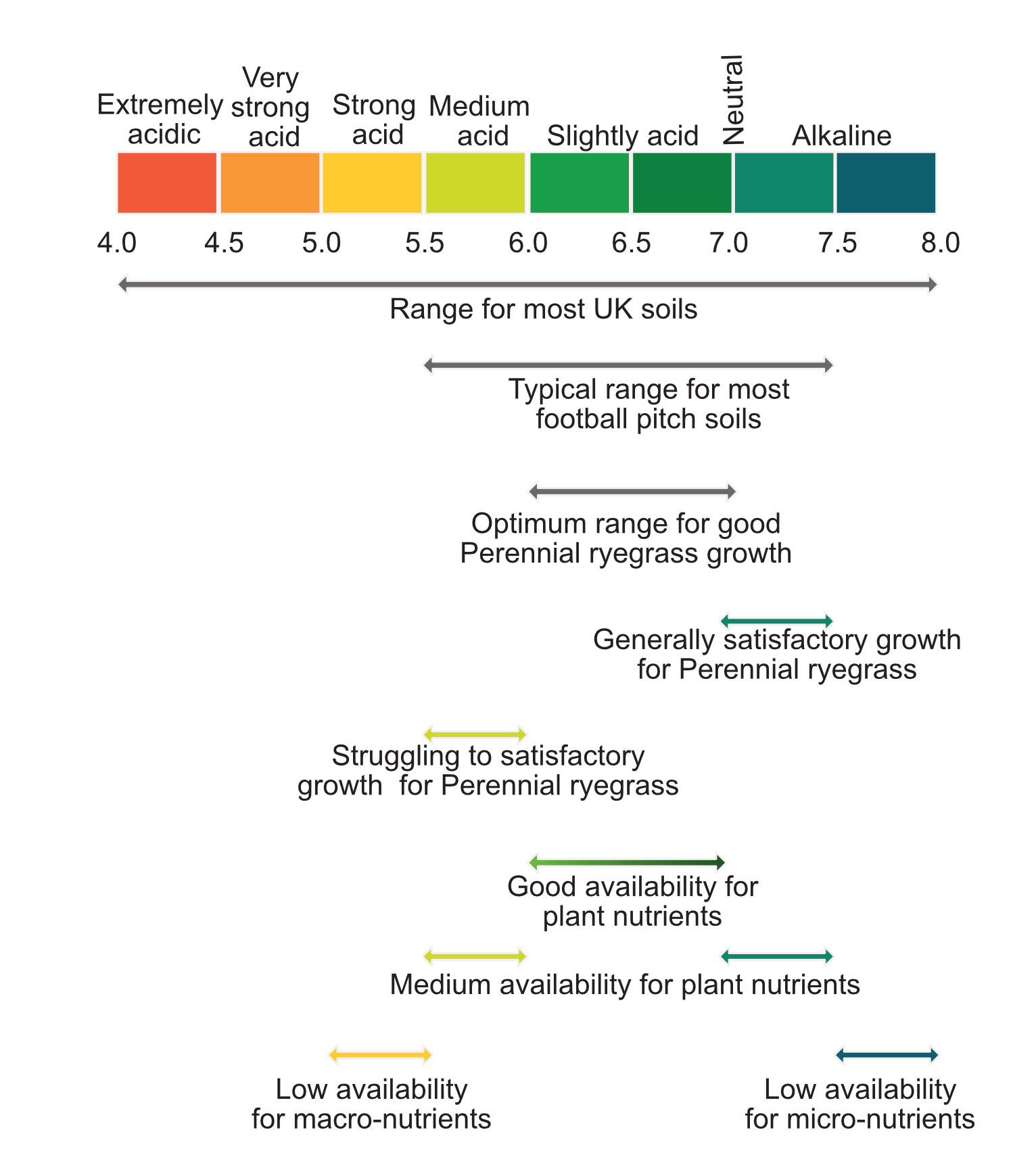
pH scale

2 How is pH measured?

The most accurate measurements are made with laboratory equipment.

However, some relatively cheap devices can give a value that is usually accurate enough for many turfgrass requirements, or at least they provide a guide that will often be within 0.5pH of an actual laboratory tested sample.

The cost of a laboratory analysis is relatively cheap, so it would usually be recommended to pay for one of these, at least as an initial starting point for pitch assessment and decision-making purposes.

3 Why is pH important?

Grasses grow within a range of soil pH values, but some grasses are more limited to how well they grow within certain ranges. For example, perennial ryegrass is typically very happy between pH 6.0 and 7.0.

At about pH 5.8 it can start to struggle, whilst at pH 5.5 it will be less robust and the sward will probably be thinning somewhat, and by pH 5.0 it will typically be producing a weak often thinner sward or may not even be able to get established. If the soil pH is 7.0 - 7.5 it will still provide conditions that are usually quite acceptable, although if it is above pH 7.5 then this could cause problems with limiting some plant nutrients, but this might not occur until it reaches pH 8.0.

There are several reasons why it is important to know the soil pH, including:

  • Helping to understand why a grass may not be as hard wearing as it might be.
  • Knowing how much a soil may need increasing or decreasing in pH value to make it an optimum range for a desirable grass.
  • Knowing which nutrients may be less available as some nutrients become locked up and less available at certain pH levels.
  • The impact it may have on the extent of earthworm casting.
  • The impact it may have on influencing potential disease attack.
  • How it might influence micro-organism activity and the effectiveness of any applied biostimulants.
  • The type of fertiliser that might be used, as different fertilisers produce different pH reactions and influence sward composition differently.
Module progress: 77%